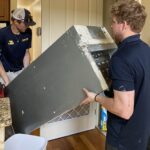
Why Bergen County Trusts Whalen & Ives for AC Installation
We’ve installed cooling systems across Bergen County since 1985, and that means sizing equipment correctly for the housing stock we see most. In Ramsey and Upper Saddle River, tight attic and crawl space access often shapes whether a ductless mini-split or a central system makes more sense. In older homes throughout Teaneck and Tenafly, an outdated electrical panel needs attention before new high-efficiency equipment can go in safely.
Our technicians are trained on equipment from Carrier, Trane, Lennox, and Daikin, and we walk every homeowner through sizing, ductwork condition, and long-term efficiency before recommending a system, rather than defaulting to the biggest or newest option available.
That’s the thinking behind the systems below, and it’s worth understanding the signs that point to installation before a repair call turns into one.
AC Systems We Install
Central air conditioning is the most common choice for homes that already have ductwork. One system cools every room, runs quietly, and when it’s sized and installed correctly, it’s one of the most cost-effective ways to cool a home for the long term.
Ductless mini-split systems use one outdoor unit and one or more wall-mounted indoor units to cool specific rooms or zones. They’re a strong fit for basements, garages, home additions, or any space central air can’t easily reach, and they rank among the most energy-efficient AC systems available.
Inverter AC systems adjust speed based on exactly how much cooling is needed at any moment, rather than blasting on and off like older equipment. That means a steadier temperature and noticeably lower electricity use. Most top-tier equipment from Carrier, Trane, Lennox, and Daikin now runs on inverter-driven compressors for this reason.
Heat pump systems handle both cooling in summer and heating in winter from a single outdoor unit. For Northern New Jersey homeowners who want year-round efficiency and lower energy bills, it’s one of the smartest long-term investments available.
Signs You Need a New AC System
Frequent Breakdowns. A system that needs a repair call more than once or twice a season is usually signaling it’s reaching the end of its useful life.
Rising Energy Bills Despite Normal Use. Aging equipment loses efficiency over time, and a steady climb in cooling costs without a change in usage often points to a system working harder than it should.
Uneven Cooling or Constant Running. A system that can’t keep rooms at a consistent temperature, or one that runs almost continuously during peak heat, may be undersized or simply worn out.
A System Over 12 to 15 Years Old. Age alone doesn’t mean a system needs replacing, but combined with rising repair costs, it’s usually the deciding factor.
Repairs That Outweigh the System’s Value. When a repair estimate starts approaching what a new system would cost, replacement is almost always the smarter long-term investment.
What Affects AC Installation Cost
Home size, duct condition, electrical capacity, equipment efficiency, and access for the outdoor unit all influence project scope. We walk homeowners through those factors before work begins so expectations stay clear.