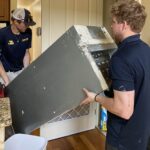
A whole-home dehumidifier removes excess moisture from the air in every room, keeping basements dry, summers comfortable, and mold and musty odors from taking hold. We install whole-house dehumidifiers for Park Ridge and Bergen County homes, connecting them to your existing heating and cooling system or placing them right where moisture problems start. Since 1985, we have helped Northern New Jersey homeowners protect their homes from the damage humidity can cause.
Why Humidity Builds Up in Bergen County Homes
Northern New Jersey summers are warm and muggy, and much of that moisture finds its way indoors. Basements are the most common trouble spot. Below-grade walls stay cool, moisture moves through foundations, and homes near the Saddle River, Pascack Brook, and the Hackensack River often deal with high groundwater during wet seasons.
Your air conditioner removes some moisture as it cools, but it is designed to control temperature first. On mild, humid days, it may satisfy the thermostat quickly and shut off before pulling much water from the air, leaving the house cool but clammy.
Many Bergen County homes add to the challenge with finished basements. Carpet, drywall, and furniture in a below-grade space absorb moisture and hold onto odors, and an oversized air conditioner can make the problem worse by running in short bursts that never dry the air. A dedicated dehumidifier handles moisture on its own schedule, regardless of what the thermostat is doing.
Signs You Need a Whole-Home Dehumidifier
A musty smell in the basement or lower level. That odor usually means humidity is high enough for mold or mildew to grow.
Your portable dehumidifier is always full. Emptying a bucket every day is a sign the moisture load is more than a small unit can handle.
Condensation on ducts, pipes, or windows in summer. Sweating surfaces mean the air is holding more water than it should.
Air that feels clammy even with the AC on. If your home feels cool and sticky at the same time, humidity is the problem, not temperature.
Mold spots, peeling paint, or warped wood. Moisture damage often shows up first on basement walls, closet corners, and wood trim.
Allergy symptoms that worsen in summer. Dust mites and mold both thrive when indoor humidity stays above 60 percent.
Whole-Home Versus Portable Dehumidifiers
Portable dehumidifiers treat a single room, need frequent emptying, and can be loud enough to hear through the floor. They also tend to wear out after a few seasons of heavy use.
A whole-home dehumidifier removes far more moisture and drains automatically to a floor drain or condensate pump, so there is no bucket to empty. It runs quietly from a basement, crawl space, or utility area and is controlled by a dehumidistat that keeps humidity in the range you choose.
How We Install a Whole-Home Dehumidifier
Every installation starts with a look at where moisture enters your home. Depending on what we find, we install the unit as a standalone system in the basement or crawl space, or ducted into your air conditioning system to dry the entire house.
We size the dehumidifier based on square footage, foundation type, and how much moisture your home takes on. We also check for sources the equipment should not have to fight, like a dryer vent leaking into the basement or poor drainage around the foundation, and we will point those out so you can address them along with the installation. Once the unit is running, we set the dehumidistat with you and explain how to read it, so you always know where your home’s humidity stands.