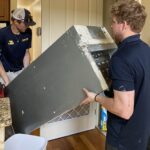
Whalen & Ives installs residential standby generators as part of our full generator services throughout Bergen County and Northern New Jersey, automatically protecting your home during power outages. Our team handles placement, fuel connection planning, electrical integration, and startup verification.
Why Bergen County Trusts Whalen & Ives for Generator Installation
We install Generac, Kohler, Cummins, and Briggs & Stratton systems, which means the sizing and warranty conversation is based on comparing real manufacturer options for your property, not steering you toward whatever’s easiest to install. Warranty terms and available capacities vary meaningfully across these brands, and a generator sized correctly on paper but paired with the wrong manufacturer for your specific fuel type or budget can end up costing more over its lifespan than a slightly different choice upfront.
Sizing and placement look different from town to town. Upper Saddle River and Woodcliff Lake’s larger homes often need a real whole-home-versus-essential-circuits conversation, while tighter lots in Park Ridge and Montvale mean pad placement and required clearances have to be planned carefully before equipment ever shows up. Local setback and noise ordinances also vary by municipality, and we confirm what your specific town requires before finalizing placement rather than assuming the same rules apply everywhere in Bergen County.
Because we hold both the NJ Electrical License (#5733) and the licenses covering gas and pump work, load review, gas connection, electrical integration, and transfer switch wiring are all handled by our own licensed team, not split across separate subcontractors for each piece of the install.
What Installation Involves
- Load review to determine essential or whole-home coverage
- Pad placement and clearances for the outdoor unit
- Gas and electrical connections completed to code
- Automatic transfer switch integration
- Startup testing and homeowner orientation
Signs You’re Ready for Generator Installation
- You’ve run a portable generator with extension cords through a window during an outage
- Your home depends on a sump pump, well pump, or medical equipment that can’t lose power
- You’ve dealt with spoiled food or storm-related damage after a multi-day outage
- You’re planning an addition, EV charger, or panel upgrade and want backup power designed in from the start
- Neighbors on your street already have standby units installed
Prepared for North Jersey Outages
Storms, grid strain, and winter weather make backup power a practical investment for many local homes. A correctly sized standby generator keeps critical systems online, including heat, refrigeration, sump pumps, and medical equipment circuits when planned that way. Northern New Jersey’s exposure to nor’easters and summer thunderstorms means outages here aren’t a rare event, and homes in more wooded areas often see multi-day restoration times when downed limbs take out service lines across a wide area rather than a single property.
Planning the Right Size
Oversizing wastes budget. Undersizing leaves important circuits dark. We help match generator capacity to the loads that matter most in your home, starting with a walkthrough of your electrical panel to identify which circuits are genuinely essential, heat, refrigeration, sump pumps, medical equipment, versus which ones can reasonably wait until utility power returns. This load review is what separates a generator that actually performs during a real outage from one that’s undersized the first time it’s truly tested.
If Your Generator Ever Needs Service
A properly installed generator should run reliably for years, but every standby system eventually needs repair or troubleshooting, whether that’s a startup failure, a transfer switch fault, or a component reaching the end of its service life. Our generator repair team services the same brands we install, so a problem down the road doesn’t mean starting over with an unfamiliar company that has to learn your system from scratch.